

A microwave sparking inside is almost always caused by metal in the cavity, and the fix is usually quick and safe. Stop the microwave straight away, open the door, and look for the obvious culprits: a fork or spoon left in a bowl, a plate with a metallic trim or gold rim, a twist tie, foil, or a takeaway container with a metal edge. Remove the metal, wipe out any food splatter that has burnt onto the walls, and check the small cover panel on the side wall for scorching. If the sparking keeps happening in an empty, clean microwave, the fault is internal, and because a microwave stores a high-voltage charge even when unplugged, that is never something to open up yourself. Route it to a licensed technician.
Arcing inside a microwave looks alarming, with blue or white flashes and a crackling sound, and it is worth taking seriously because it can burn the interior and damage the parts that make it work. In most kitchens the cause is simple and harmless once you know what to look for, but there is a clear line between the checks you can safely make and the repairs that must be left to a professional.
Metal in the cavity is the usual cause
Microwaves cook by bouncing energy around a metal box, and any stray metal inside concentrates that energy into a spark. This is the reason for the overwhelming majority of microwave sparking. The offenders are easy to miss: cutlery left in a bowl of leftovers, a dinner plate with a fine gold or silver band around the rim, the metal handle on a mug, a twist tie on a bag, aluminium foil, or a food container with a foil lining or metal clasp. Even a single staple in a paper bag can set it off.
If your microwave sparks, stop it, open the door, and take out anything metal. Swap metal-trimmed crockery for plain microwave-safe dishes, and check that the container you are heating is rated for microwave use. In most cases, removing the metal and running the microwave again on a cup of water confirms the problem is solved.

Burnt food and a dirty cavity
Baked-on food and grease can also arc. When splatter builds up on the interior walls or the roof of the cavity, it can char, and a burnt, carbonised spot behaves a bit like metal and starts to spark. This is why a microwave that has never sparked before can suddenly start after a messy reheat. Let the microwave cool, then wipe the inside thoroughly with a damp cloth and a little dishwashing liquid, paying attention to the roof and corners where splatter hides. A clean cavity often stops the sparking on its own.
A burnt or damaged waveguide cover
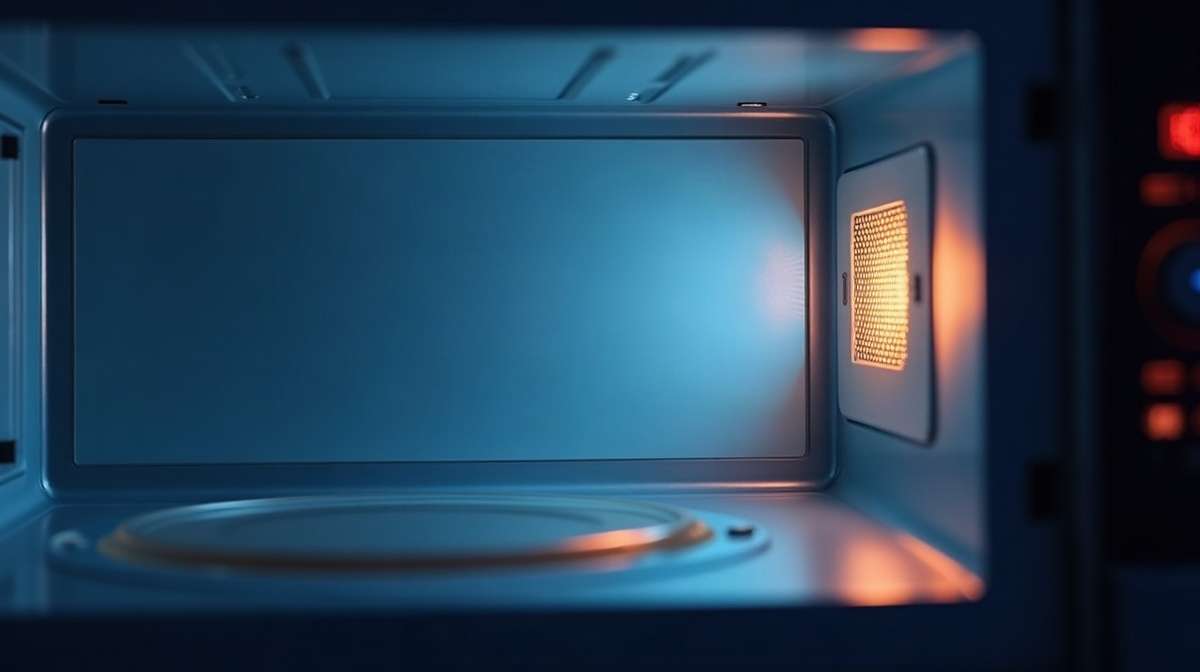
Look at the side or back wall of the cavity and you will see a small rectangular cover, usually a light-coloured panel about the size of a matchbox. This is the waveguide cover, and it shields the opening where the cooking energy enters the cavity. Grease and food can splash onto it, soak in, and eventually char, and once it is burnt it arcs and sparks. A scorched, blistered or holed waveguide cover is a common cause of persistent sparking.
The cover itself is a replaceable part, but choosing and fitting the correct one for your model, and confirming nothing behind it is damaged, is best handled by a technician rather than guessed at, because the area behind it is live when the microwave runs. If the cover is only lightly marked, cleaning it gently may buy time, but a badly burnt cover should be replaced before you keep using the appliance.
The one thing never to do
Never open the outer casing of a microwave to investigate sparking, and never keep running it once you have ruled out metal and a dirty cavity. Microwaves contain a high-voltage capacitor that can hold a dangerous electric charge long after the appliance is unplugged, so the inside of the casing is genuinely hazardous, unlike most other kitchen appliances. There is nothing behind that casing a home user should touch. If the sparking is coming from the parts that generate the cooking energy, the repair belongs entirely to a qualified technician with the tools to discharge and test it safely.
When microwave sparking needs a technician
Removing metal, cleaning the cavity and lightly wiping the waveguide cover are the safe checks. If your microwave still sparks when it is empty and clean, if the waveguide cover is badly burnt, if you see arcing coming from inside the walls rather than off a dish, or if the sparking comes with a burning smell or the microwave has stopped heating, stop using it and book a repair. Those faults are internal and high-voltage, so they are not a DIY fix.
That is where our team comes in. CAI Appliance Services repairs microwaves across Perth, with fully qualified mobile technicians who come to you. We are an authorised service agent for Bosch, Electrolux, LG and Miele, and we regularly repair Fisher and Paykel, Samsung, Smeg, Westinghouse and Whirlpool units too, so the work is done safely and with the correct parts. Call CAI on 0415 343 413 to book a technician.
Frequently asked questions
Why is my microwave sparking inside?
Is it safe to use a microwave that has sparked?
What is the small panel on the wall of my microwave?
Can I replace the waveguide cover myself?
Keeping the rest of your kitchen running well? Read our related guides on a microwave that is not heating and a cooktop that is not working, or book a Perth technician with CAI.

